Navigating Metro Detroit Commercial Zoning Regulations for Successful Commercial Developments
By Property Manager, ValCrest Properties
Navigating the complex landscape of zoning laws is crucial for anyone involved in commercial developments in Metro Detroit. Zoning regulations dictate how land can be used, impacting everything from property values to the types of businesses that can operate in specific areas. This article aims to provide a comprehensive overview of the key zoning laws affecting commercial properties in Metro Detroit and Troy, MI, while also highlighting how ValCrest Properties can assist in ensuring compliance and maximizing development potential. Understanding these regulations is essential for property owners, investors, and developers to avoid costly mistakes and to leverage opportunities for growth. We will explore the classifications of zoning laws, the implications of land use restrictions, and best practices for property management, construction coordination, and investment strategies.
Research further underscores the significant economic implications of these regulations on broader economic activity and consumer welfare.
Economic Impact of Commercial Real Estate Regulations
Commercial real estate accounts for roughly 20% of the U.S. fixed asset stock, and commercial land use is highly regulated. However, little is known about the quantitative impact of these regulations on economic activity or consumer welfare. This paper develops a spatial general equilibrium model of the U.S. economy that includes commercial real estate regulations and congestion effects, the latter of which provide a rationale for such regulations. The model is tailored to exploit the near-universe of CoreLogic’s commercial, parcel-level, property tax records to construct a quantitative index of commercial real estate regulations for nearly every commercial property. We use the model to evaluate the positive and normative impacts of commercial land use deregulations. Moderately relaxing commercial regulations across all U.S. cities yields large allocative efficiency effects, with output gains of about 3 percent to 6 percent and welfare gains of about 3 percent to 9 percent of lifetime consumption.
The impact of commercial real estate regulations on US output, F Babalievsky, 2023
What Are the Key Commercial Zoning Laws in Metro Detroit and Troy, MI?
Commercial zoning laws in Metro Detroit and Troy, MI, are designed to regulate land use and ensure that developments align with community goals. These laws define how properties can be utilized, impacting everything from the types of businesses that can operate to the density of development. Understanding these regulations is essential for successful commercial development, as they can significantly influence project feasibility and profitability.
Which zoning classifications affect commercial properties in Metro Detroit?
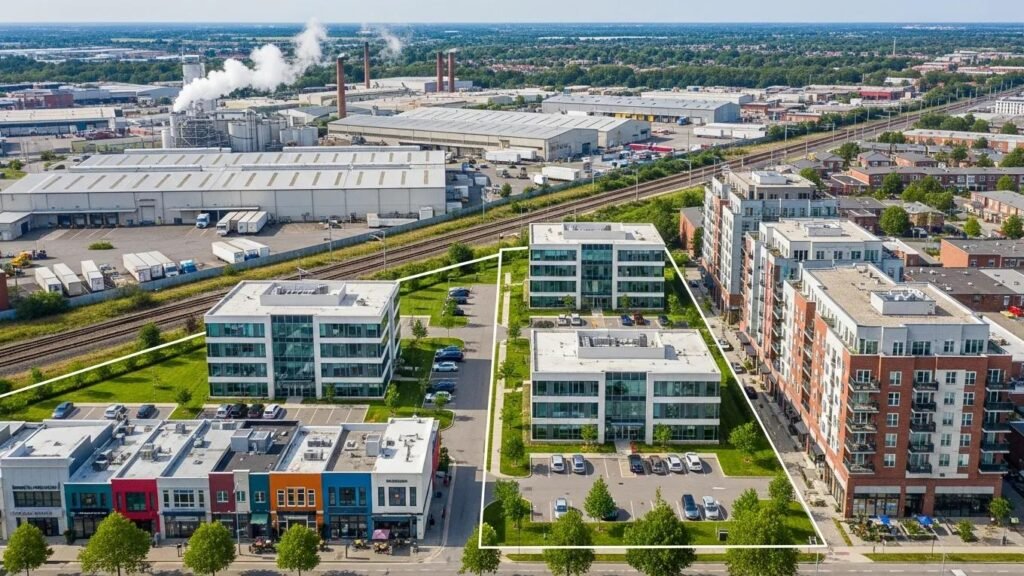
In Metro Detroit, several zoning classifications impact commercial properties, including:
- Commercial Districts: These areas are designated for retail, office, and service businesses, allowing for a variety of commercial activities.
- Industrial Zones: These classifications are intended for manufacturing and heavy industrial uses, often with specific requirements for noise and emissions.
- Mixed-Use Developments: These zones allow for a combination of residential, commercial, and sometimes industrial uses, promoting a more integrated community approach.
Each classification comes with its own set of regulations regarding building height, lot size, and permitted uses, which can significantly affect development plans.
How do land use restrictions impact commercial development projects?
Land use restrictions are critical components of zoning laws that dictate how land can be utilized. These restrictions can include:
- Setback Requirements: These dictate how far buildings must be from property lines, affecting the usable area of a lot.
- Height Restrictions: Limits on building height can influence the design and scale of a project.
- Density Limits: These regulations control the number of units or square footage allowed on a property, impacting overall project viability.
Understanding these restrictions is vital for developers to ensure compliance and to avoid potential legal challenges that could delay or derail projects.
These specific restrictions are part of a larger framework of land use regulations that profoundly influence regional economic development.
Land Use Regulations and Regional Economic Development Impacts
AbstractThis paper uses a data-intensive computable general equilibrium (CGE) model of a medium-sized city with integrated commercial and residential land data to analyze changes to local land use regulations via changes in land supply elasticities on economic development measures (employment, household income, housing prices, and tax revenue) under various types of regional growth that originate from different local sectors. The CGE framework overcomes difficulties of econometric modeling in this area, namely, measurement consistency, impact isolation, and endogeneity issues. The results both link the sparse work in this area and provide a systematic analysis including marginal and total impacts.(JEL R11, R52)
Land use regulations and regional economic development, P Burnett, 2016
How Does ValCrest Properties Support Zoning Compliance in Commercial Brokerage and Leasing?
ValCrest Properties plays a pivotal role in helping clients navigate the complexities of zoning compliance in commercial brokerage and leasing. Their expertise ensures that clients are well-informed about zoning laws and how they apply to their specific projects.
What brokerage services integrate zoning law expertise for Metro Detroit clients?
ValCrest Properties offers a range of brokerage services that incorporate zoning law expertise, including:
- Site Selection: Assisting clients in identifying properties that meet their business needs while complying with local zoning regulations.
- Market Analysis: Providing insights into zoning classifications and their implications for property values and development potential.
- Negotiation Support: Helping clients navigate lease agreements with a clear understanding of zoning constraints.
These services ensure that clients make informed decisions that align with zoning requirements, minimizing risks associated with non-compliance.
How does tenant representation influence lease negotiations under zoning constraints?
Tenant representation is crucial in lease negotiations, particularly when zoning constraints are involved. ValCrest Properties helps tenants understand how zoning laws affect their intended use of a space, which can influence:
- Lease Terms: Negotiating terms that accommodate zoning requirements, such as permitted uses and operational hours.
- Compliance Clauses: Ensuring that lease agreements include provisions for compliance with zoning laws, protecting tenants from potential legal issues.
By leveraging their expertise, ValCrest Properties enhances the negotiation process, ensuring that tenants secure favorable terms while adhering to zoning regulations.
What Are Best Practices for Property Management and Operational Efficiency Within Zoning Regulations?
Effective property management is essential for maintaining compliance with zoning regulations and optimizing operational efficiency. Implementing best practices can help property owners navigate the complexities of zoning laws while maximizing the value of their assets.
How does property management ensure ongoing zoning compliance?

Property management teams play a vital role in ensuring ongoing zoning compliance through:
- Regular Inspections: Conducting routine checks to ensure that properties adhere to zoning regulations and identifying any potential issues before they escalate.
- Documentation Management: Keeping accurate records of compliance efforts, including permits and inspections, to demonstrate adherence to zoning laws.
- Tenant Education: Informing tenants about zoning regulations that may affect their operations, fostering a culture of compliance.
These practices help property owners mitigate risks associated with zoning violations and maintain the integrity of their developments.
What operational strategies optimize commercial property performance under zoning laws?
To optimize commercial property performance while adhering to zoning laws, property managers can implement several strategies:
- Flexible Space Utilization: Designing spaces that can adapt to changing tenant needs while remaining compliant with zoning regulations.
- Sustainability Initiatives: Incorporating green building practices that may align with local zoning incentives, enhancing property appeal and value.
- Community Engagement: Building relationships with local authorities and community members to stay informed about potential zoning changes and community needs.
These strategies not only enhance property performance but also foster positive relationships with the surrounding community.
How Is Construction Coordination Managed to Meet Zoning Approval Requirements?
Construction coordination is a critical aspect of ensuring that projects meet zoning approval requirements. Effective management of this process can streamline development timelines and reduce the risk of non-compliance.
What is the process for obtaining zoning permits and variances in Metro Detroit?
The process for obtaining zoning permits and variances in Metro Detroit typically involves several key steps:
- Application Submission: Developers must submit a detailed application outlining the proposed project and how it complies with zoning regulations.
- Public Hearings: Many projects require public hearings where community members can voice their opinions, which can influence the approval process.
- Approval or Denial: After reviewing the application and public feedback, local authorities will either approve or deny the request, often with conditions.
Understanding this process is essential for developers to navigate the complexities of zoning approvals effectively.
How does construction oversight align with zoning compliance timelines?
Construction oversight is crucial for ensuring that projects adhere to zoning compliance timelines. This involves:
- Regular Progress Monitoring: Keeping track of construction milestones to ensure that they align with approved plans and zoning requirements.
- Coordination with Local Authorities: Maintaining open lines of communication with zoning officials to address any compliance issues that may arise during construction.
- Adjusting Schedules: Being flexible with construction timelines to accommodate any necessary changes due to zoning compliance requirements.
By effectively managing construction oversight, developers can minimize delays and ensure that projects are completed in accordance with zoning laws.
What Investment Strategies Consider Zoning Laws for Long-Term Commercial Development Success?
Investment strategies that take zoning laws into account are essential for long-term success in commercial development. Understanding how these regulations impact property values and development potential can inform better investment decisions.
How do zoning regulations influence commercial real estate investment decisions?
Zoning regulations significantly influence commercial real estate investment decisions by:
- Determining Property Value: Properties in desirable zoning classifications often command higher prices due to their potential for profitable use.
- Impacting Development Feasibility: Understanding zoning laws helps investors assess whether a proposed project is viable within a specific area.
- Guiding Long-Term Planning: Investors can use zoning information to make informed decisions about future developments and expansions.
By considering zoning regulations, investors can enhance their decision-making processes and improve the likelihood of successful outcomes.
Indeed, the relationship between zoning regulations and strategic investor attraction, particularly concerning land use and building limits, is a critical area of study for real estate success.
Zoning Regulations, Land Use, and Real Estate Investor Confidence
Purpose of Study:This study aimed to investigate the relationship between zoning regulations and strategic investor attraction in Nairobi’s real estate sector, focusing on land use restrictions, building height limits, and density allowances.Problem Statement:The real estate sector has been an essential driver of economic growth in many cities, yet the role of zoning regulations in influencing strategic investor attraction remains underexplored in some urban contexts. Zoning regulations, which define land use, building height limits, and density allowances, play a pivotal role in shaping urban development and investor confidence.
ZONING REGULATIONS AND STRATEGIC INVESTOR ATTRACTION IN THE REAL ESTATE SECTOR: PERSPECTIVES FROM NAIROBI CITY COUNTY, 2025
What case studies demonstrate successful zoning navigation in Metro Detroit?
Several case studies illustrate successful navigation of zoning laws in Metro Detroit, showcasing the importance of strategic planning and compliance. For example:
- Case Study 1: A retail development in Troy successfully navigated zoning restrictions by engaging with local authorities early in the planning process, resulting in a streamlined approval timeline and community support.
- Case Study 2: An industrial project in Detroit adapted its design to meet zoning requirements, ultimately enhancing its operational efficiency and securing favorable financing terms.
These examples highlight the value of understanding and effectively navigating zoning laws to achieve successful commercial development outcomes.
Frequently Asked Questions
What are the consequences of non-compliance with zoning regulations in Metro Detroit?
Non-compliance with zoning regulations in Metro Detroit can lead to significant consequences for property owners and developers. These may include fines, legal action, and the potential for forced removal of non-compliant structures. Additionally, non-compliance can hinder future development opportunities, as it may damage relationships with local authorities and the community. It is crucial for developers to understand and adhere to zoning laws to avoid these risks and ensure the long-term success of their projects.
How can I find out the zoning classification of a specific property in Metro Detroit?
To determine the zoning classification of a specific property in Metro Detroit, you can visit the local municipality’s website or contact the zoning office directly. Many cities provide online zoning maps and databases that allow you to search by address. Additionally, consulting with a local real estate professional or zoning expert can provide insights into the property’s zoning status and any applicable regulations. This information is essential for making informed decisions regarding property use and development.
What role do public hearings play in the zoning approval process?
Public hearings are a critical component of the zoning approval process in Metro Detroit. They provide a platform for community members to express their opinions and concerns regarding proposed developments. During these hearings, developers present their projects, and local authorities consider public feedback before making decisions. This process ensures transparency and community involvement, which can significantly influence the outcome of zoning applications. Engaging with the community during this phase can also help developers build support for their projects.
Are there any incentives for developers to comply with zoning regulations?
Yes, there are several incentives for developers to comply with zoning regulations in Metro Detroit. Compliance can lead to smoother approval processes, reducing the time and costs associated with obtaining permits. Additionally, properties that adhere to zoning laws often enjoy increased marketability and higher property values. Some municipalities may also offer tax incentives or grants for developments that align with community goals, such as sustainability initiatives or affordable housing projects. These benefits underscore the importance of understanding and following zoning regulations.
How can community engagement impact zoning decisions?
Community engagement can significantly impact zoning decisions by fostering dialogue between developers and local residents. When developers actively involve the community in the planning process, they can address concerns and incorporate feedback, which may lead to greater support for their projects. Positive community relations can enhance the likelihood of zoning approvals and reduce opposition during public hearings. Engaging with local stakeholders demonstrates a commitment to community values, which can ultimately facilitate smoother development processes and successful outcomes.
What are the common challenges developers face when navigating zoning laws?
Developers often encounter several challenges when navigating zoning laws, including complex regulations that vary by municipality. Understanding the specific requirements for different zoning classifications can be daunting, especially for those unfamiliar with local laws. Additionally, developers may face opposition from community members who are concerned about potential impacts on their neighborhoods. Delays in the approval process due to public hearings or additional documentation requirements can also pose significant hurdles. Engaging with zoning experts can help mitigate these challenges and streamline the development process.