Understanding Commercial Lease Pricing: Key Factors in Metro Detroit's Market for Smarter Investment Decisions
The Metro Detroit commercial real estate market moves quickly, and lease pricing is shaped by a mix of regional conditions and broader economic trends. Investors, landlords, and tenants all benefit from a clear view of the forces that set rents — from macroeconomic indicators to local supply and demand and the specifics of lease agreements. This article outlines the most influential factors so stakeholders can make practical, well-informed decisions.
For property owners and investors, the task is to align these market signals with their financial and operational goals. Below we cover how economic trends, common lease structures, brokerage and tenant representation, and hands-on property management influence lease pricing and tenant retention in Metro Detroit.
Key factors influencing commercial lease pricing in Metro Detroit's real estate market include:
Several elements determine how commercial leases are priced across Metro Detroit. Recognizing these factors helps both landlords and tenants negotiate more effectively and plan strategically. Key influences include:
- Local Market Expertise: Deep knowledge of neighborhood demand, recent transactions, and comparable rents materially improves negotiation outcomes.
- Zoning Regulations: Local zoning and land-use rules affect what businesses can operate in a space and therefore alter its value.
- Lease Duration and Rent Escalation: Lease length and built-in escalation clauses (CPI-based or fixed increases) change the long-term cost profile.
- Financial Planning: Sound budgeting, capex planning, and cash-flow management shape both landlord and tenant decisions during negotiations.
- Tenant Representation: Experienced brokers who represent tenants can secure more favorable terms, protecting tenant interests and reducing hidden costs.
- Market Trends: Local occupancy rates, new development pipelines, and shifts in demand across property types all influence pricing strategies.
- Economic Indicators: Interest rates, employment trends, and broader economic health drive demand and pricing at the local level.
- Operational Strategies: How a tenant intends to use the space — hours of operation, build-out needs, and traffic patterns — affects lease terms and pricing.
ValCrest Properties, a Metro Detroit–focused commercial real estate firm, advises investors and owners on how to interpret these drivers and optimize their portfolios. ValCrest Properties offers market insight and practical services to support those decisions.
What Economic and Market Trends Drive Commercial Lease Rates in Metro Detroit?
Economic and market trends are central to lease pricing. Local supply and demand, a property’s location, and nearby development activity all feed into how landlords price space and how tenants evaluate options.
How Do Supply, Demand, and Location Affect Lease Pricing?
Supply and demand operate the same here as elsewhere: when demand outstrips available space, rents rise; when supply exceeds demand, rents soften. Location remains a critical premium — properties in high-traffic, amenity-rich areas command higher rents than those in secondary locations. Neighborhood-level case studies across Metro Detroit demonstrate wide variance in pricing tied to accessibility, visibility, and nearby uses.
Different property types also respond at different speeds to market shifts, which can affect leasing strategies and timing.
Study on Commercial Property Rent Dynamics (MR Ibanez, 2013)
This study examines market rental rates for commercial properties across 34 major U.S. metropolitan areas from 1990 Q2 through 2009 Q2, across office, industrial, flex, and retail segments. It finds notable differences in how quickly markets adjust to changing supply and demand: office markets tend to return to equilibrium more slowly, while industrial and flex sectors adjust faster. Higher-quality (Grade A) properties generally exhibit quicker adjustments within their segments.
What Impact Do Industry-Specific Market Trends Have on Lease Rates?
Industry shifts change which property types are most valuable. The rise of e-commerce, for example, has increased demand for logistics and warehouse space, pushing rents higher in those submarkets. Working with experienced brokerage services helps landlords and tenants anticipate these sector-driven shifts and price accordingly.
Which Commercial Lease Structures Are Common and How Do They Influence Pricing?
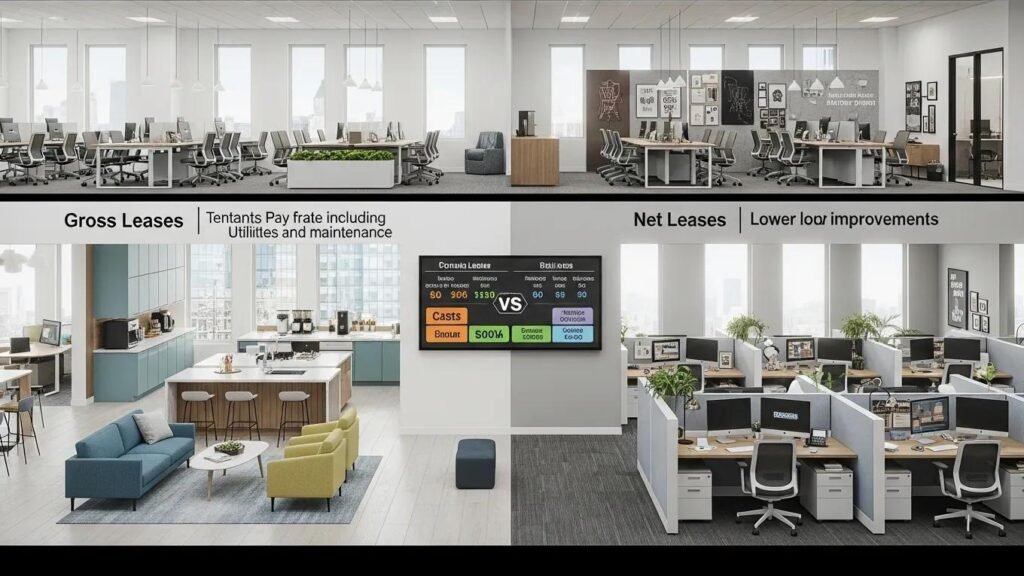
Lease structure determines which party carries operating costs and how rent compares across listings. Understanding these categories helps stakeholders compare offers on an apples-to-apples basis.
What Are Gross, Net, and Modified Gross Leases?
Gross leases roll operating expenses into a single rent payment, simplifying budgeting for tenants. Net leases shift some or all operating costs (taxes, insurance, maintenance) to the tenant, which can lower base rent but increase variable costs. Modified gross leases split expenses between landlord and tenant, creating a hybrid solution. Each type changes risk exposure and cash-flow planning for both sides.
How Do Tenant Improvement Allowances and Escalation Clauses Affect Lease Costs?
Tenant improvement (TI) allowances reduce upfront build-out costs for tenants but are typically factored into the overall lease economics, either through higher rent or longer terms. Escalation clauses (annual CPI adjustments or fixed increases) affect long-term affordability and should be modeled into a tenant’s five- to ten-year cost forecast. Clear negotiation on these points protects both parties from unexpected expense shifts.
How Do Brokerage Services and Lease Negotiation Factors Shape Commercial Lease Agreements?
Professional brokerage and representation materially improve negotiation outcomes by bringing market data, transaction experience, and strategic perspective to the table.
What Role Does Tenant Representation Play in Negotiating Favorable Lease Terms?
Tenant representation means a broker advocates for the tenant’s interests during negotiations — benchmarking comparable deals, identifying hidden costs, and securing tenant-favorable clauses. Skilled tenant reps can reduce rent expense and risk while expediting the leasing process. Learn more about our tenant representation services.
How Does Market Expertise Enhance Lease Negotiation Outcomes?
Market-savvy brokers and advisors provide current transaction comparables, vacancy and absorption data, and forecasts that enable confident bargaining. With this context, both landlords and tenants can identify fair price points and structure deals that support long-term partnerships.
In What Ways Does Commercial Property Management Influence Lease Pricing and Tenant Retention?
Active property management affects perceived value, operational costs, and tenant satisfaction — all of which feed back into lease pricing and renewal rates.
How Do Facilities Operations Affect Occupancy Costs?
Well-run facilities reduce downtime, control utility and maintenance costs, and enhance tenant experience. Properties with efficient operations and responsive maintenance often justify higher rents and enjoy lower vacancy rates.
What Strategies Improve Tenant Retention and Lease Stability?
Proactive maintenance, timely communication, clear service-level expectations, and a willingness to accommodate reasonable tenant needs all increase retention. Long-term tenants lower turnover costs and stabilize income, enabling landlords to maintain competitive but sustainable pricing.
How Does Construction Coordination and Property Improvement Impact Commercial Lease Values?
Targeted capital improvements and tight construction coordination raise a property’s competitiveness and often lead to higher achievable rents.
What Is the Effect of Renovations and Asset Enhancements on Lease Pricing?
Renovations that modernize systems, layouts, or amenities increase tenant appeal and can push lease rates upward. Smart investments that improve functionality or reduce operating costs typically yield the best returns.
How Do Upgrades Align with Market Expectations and Sustainability Trends?
Upgrades that improve energy efficiency, indoor environmental quality, or accessibility meet growing tenant expectations and ESG requirements. These improvements can reduce operating expenses for tenants and attract sustainability-minded lessees, supporting stronger rental rates and longer-term demand.
What Future Trends Will Influence Metro Detroit's Commercial Lease Market Through 2026?

Looking ahead, several trends are likely to shape lease pricing in Metro Detroit: sustainability and ESG priorities, ongoing demand for industrial and logistics space, and shifts in office use driven by hybrid work models. Planning now helps owners and tenants adapt to these forces rather than react to them.
How Will ESG Factors and Sustainability Shape Lease Negotiations?
ESG considerations increasingly factor into leasing conversations — from energy-efficiency standards to tenant reporting requirements. Buildings that demonstrate lower operating costs and better environmental performance often attract a premium and broader tenant interest.
What Role Does Industrial Space Demand Play in Office Lease Rate Changes?
Strong demand for industrial and logistics space can redirect developer attention and capital, which in turn affects office supply and pricing dynamics. As employers adopt hybrid workplace strategies, some office demand softens while owners explore repurposing or amenity upgrades to retain value. Expect continued interplay between these segments through 2026.